Cataract surgery in Nigeria: what to expect and what it costs
How cataracts develop, when surgery becomes the right choice, what the procedure and recovery look like, and what drives the cost in Nigeria.
Cataract is the single largest cause of avoidable blindness in Nigeria, and it is also one of the most treatable. The natural lens inside the eye clouds over with age, colours dull, glare gets worse at night, and reading becomes a struggle. Surgery replaces that clouded lens with a clear artificial one.
Patients at Canon Eye Clinic in Uyo usually come to us with the same three questions: is it time, what happens on the day, and what will it cost. Here are honest answers.
How to know it is time
There is no pressure reading or measurement that declares a cataract ready. The decision is functional. If glare from oncoming headlights stops you driving at night, if a stronger glasses prescription no longer helps, if reading or recognising faces has become difficult, or if the cloudiness is interfering with your work, then surgery is worth discussing.
Waiting until a cataract is dense is not a virtue. Very advanced cataracts are harder to remove and carry more risk, so there is no benefit in delaying once daily life is affected.
The assessment before surgery
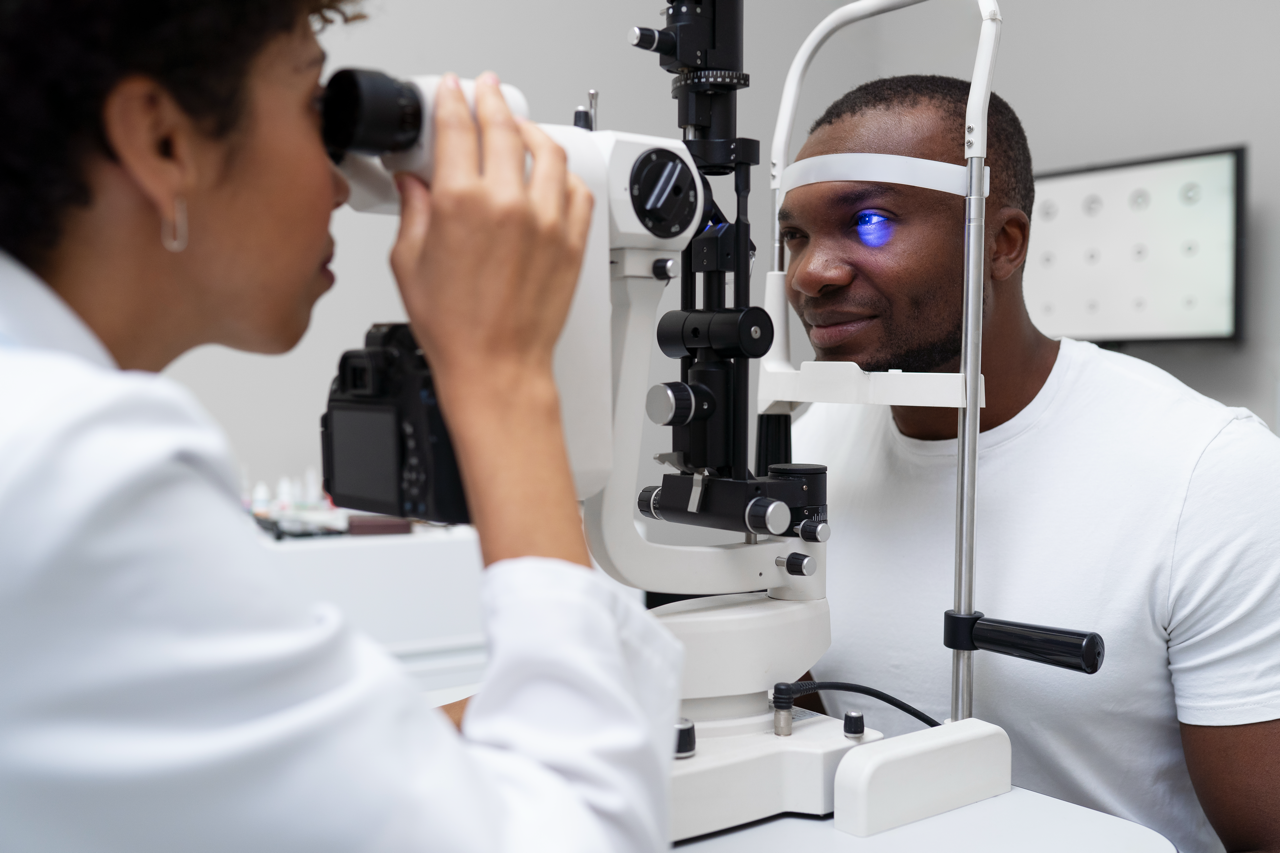
Before any surgery you need a full examination: refraction, pressure check, a look at the retina behind the cataract where possible, and biometry, which measures the eye to calculate the power of the artificial lens that will be implanted. Getting biometry right is what determines how well you see afterwards without glasses.
We also review your general health. Uncontrolled diabetes or blood pressure should be stabilised first, and some prostate medications affect how the pupil behaves during surgery, so tell your surgeon everything you take.
What happens on the day
Modern cataract surgery is a day procedure under local anaesthetic. The surgeon makes a very small incision, breaks up and removes the cloudy lens, and slides a folded intraocular lens into the same capsule that held the natural one. It usually takes 15 to 30 minutes per eye, you are awake, and you feel pressure rather than pain.
You go home the same day with a shield over the eye and a schedule of drops. Vision is hazy at first and sharpens over the following days. Most people are reviewed the next day, then again after a week and a month.
Recovery, honestly
Use your drops exactly as prescribed, do not rub the eye, keep water and dust out of it for the first weeks, and avoid heavy lifting and bending at the waist. Avoid swimming and dusty environments until you are cleared.
Final glasses are prescribed about four to six weeks later, once the eye has settled. Many people still need reading glasses afterwards, depending on the type of lens implanted.
What drives the cost in Nigeria
Cost varies enormously between a subsidised outreach programme and a private facility in Lagos or Abuja. Three things move the figure: the surgical technique, the type of intraocular lens, and where it is done.
Standard monofocal lenses give excellent distance vision and are the most affordable option. Toric lenses correct astigmatism and multifocal lenses reduce the need for reading glasses, both at a premium. Also budget for the pre-surgery assessment, the drops, the follow-up visits and the final glasses, which are often left out of a quoted price.
Where Canon Eye Clinic fits in
We diagnose cataracts, measure how much they are affecting your sight, manage your eye health before and after surgery, and co-manage your care with trusted ophthalmic surgeons when the time comes. We will also tell you plainly when a cataract is not yet the thing limiting your vision, because sometimes it is not.
If your night driving has become uncomfortable or a new prescription is no longer helping, book a comprehensive eye exam in Uyo and let us look properly.
Talk to our team at Canon Eye Clinic.
Book a consultation online or join our free screening this Saturday in Uyo.